Demystifying AI and Mental Health at NAMI Wisconsin Annual Conference
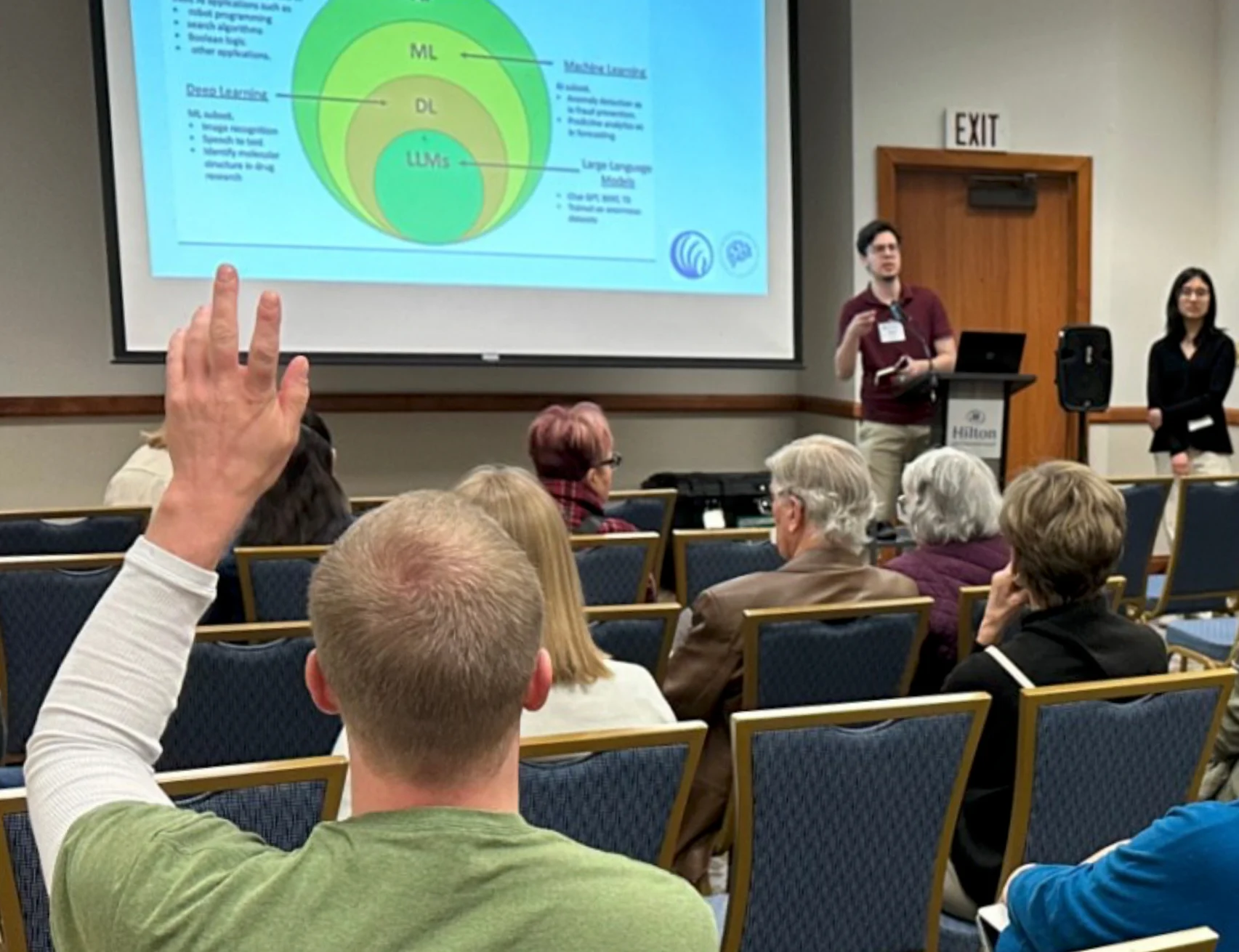
Two researchers from the Division of Digital Psychiatry brought a session on AI and mental health to the NAMI Wisconsin Annual Conference in Appleton on April 11, reaching an audience of mental health professionals, family members, and people with lived experience.
Mason Granof and Christine Shi led the breakout, titled "Demystifying AI and Mental Health: From Hype and Harm to Evidence and Evaluation." The session covered AI fundamentals, including how these systems work, where they fail, and the particular risks they pose in mental health contexts. It also surveyed how people are currently using AI for emotional support, in some cases in ways that approach the territory of AI-mediated therapy. Mason and Christine shared documented cases of "AI psychosis," a term for situations in which AI interactions have reinforced or triggered psychotic symptoms, and presented the division's work in digital literacy education.
A central focus was MindBench.ai, a platform developed in partnership with NAMI to evaluate large language models specifically for mental health applications. Attendees were invited to participate in ongoing research by completing a survey on AI chatbot use and contributing to the development of test cases for model evaluation.
Participants reported limited familiarity with AI and widespread skepticism about it, though their actual experiences varied. Some described using AI for everyday tasks; others described cases in which AI had reinforced unhelpful beliefs in family members or clients. Following the session, participants reported feeling more prepared to support people in their communities who are already using these tools.
Enjoyed this article?
Subscribe for monthly updates on our research, platforms, and programs.